Meta's Muse Wonder, Active Memory, and What Changes for the Agent Now Standing in Your WhatsApp Inbox
Contents
The first time the new model mattered to me wasn't a benchmark. It was a customer.
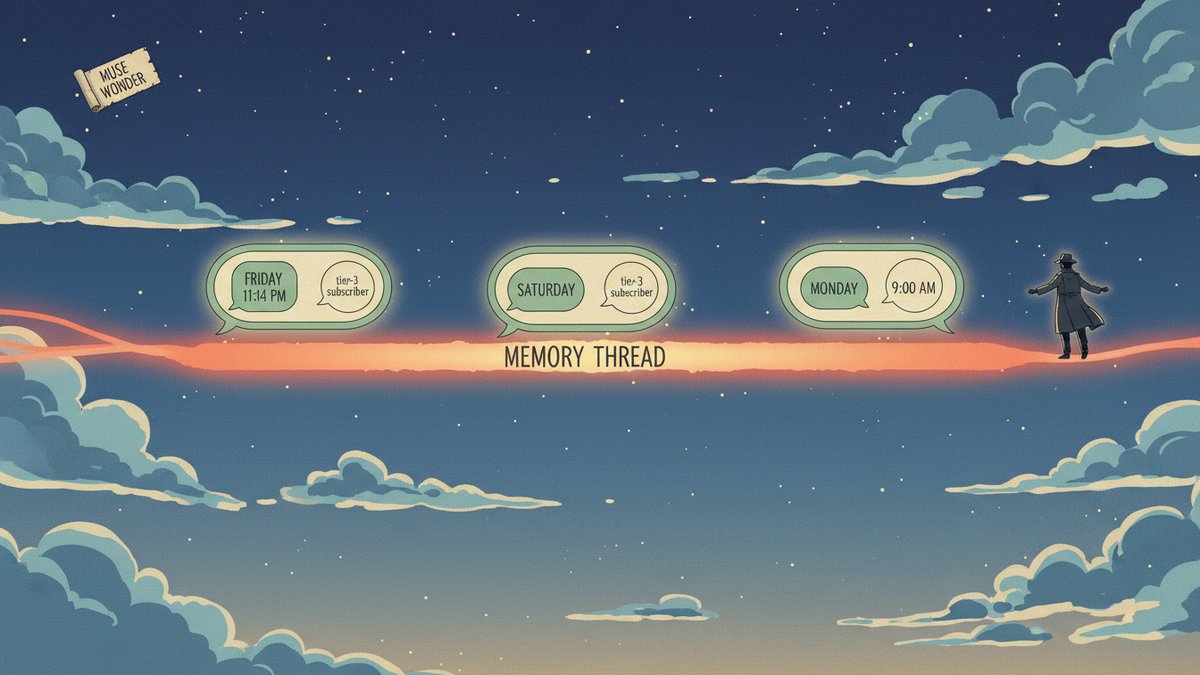
A reader who subscribed to a tier-three newsletter back in March DM'd my WhatsApp Business line last Thursday at 11:14pm asking whether we had an updated guide for the Q4 holiday push. My current WhatsApp Business auto-reply handled the question politely, sent the latest evergreen link, and asked if she wanted to subscribe. She didn't reply.
I am willing to bet the model behind that reply had no idea she was a tier-three subscriber. No idea she had asked the same kind of question in February. No idea which of the past six newsletters she had opened. The model that runs on the surface where a customer like her meets me was, until this week, Muse Spark — a deliberately lightweight, low-latency design that Meta positioned as a coding-and-agents workhorse, not a customer-history keeper. The reply that fired at 11:14pm was a stateless reply in a stateless conversation. The same person could ask the same question tomorrow and get a reply indistinguishable from a stranger's.
On October 12, Meta shipped Muse Wonder and Muse Wonder Full, the first models Meta Superintelligence Labs has openly called frontier-class. Both are confirmed to power the Muse Agent that lives in your WhatsApp inbox, your Instagram DM, the Muse iOS/Android/web app, and (as of Meta Connect last month) the Mac desktop and the upcoming Muse Charm glasses. The frontier metric that most coverage led with was the Artificial Analysis Intelligence Index — Wonder Full scored 56, tying Claude Sonnet 5.5, ahead of GPT-6 Astra at 53. The frontier metric that should catch a marketer's eye is one Meta named first in its own announcement: Active Memory, the ability to "carry what matters to you across conversations and bring back the details that are relevant to the task at hand," with Meta's own testing claiming it now beats Fable, Opus, and Astra on the MemoryBench benchmark.
If you read my early-read on the Muse Agent three weeks ago — or the two-week diary that followed it — you already know the routing principle for the agent that now lives in your surfaces. This post is the variable I didn't have then: the model running underneath that agent is about to be frontier-class and memory-equipped. That changes which marketing jobs are worth handing to it, and where I'd still keep an eye on the audit log.
What actually shipped, in Meta's own words
Grounding, drawn from Meta's newsroom post and the technical coverage that landed the same day.
Two models under the Wonder name. Muse Wonder is available through the Meta Model API today at $4 per million input tokens and $20 per million output tokens, with cached input discounted to $0.20 per million. Muse Wonder Full is the larger sibling and is gated behind the $50/month Muse Code subscription — no API access. That gating matters and I'll come back to it in the routing section. Both models are multimodal (text, image, audio, video in; text out) with roughly a one-million-token context window. They were trained at Meta's Prometheus data center in central Ohio, and both will roll into the Muse Agent that already lives on the surfaces you advertise on.
Meta has been explicit about what differentiates these from the briefing: Active Memory and Active Focus. Active Memory is the persistence story — context carried across sessions, with the model retrieving what's relevant at the moment a task needs it. Active Focus is the resilience story — when a task gets hard, the model tries other approaches, recovers from errors, and "follows through" rather than stalling out and asking the user for help. Active Memory is the marketer-relevant one. Active Focus is the agent-reliability one. They are related — the same engineering muscle tends to power both — but for a marketer they answer different questions.
The benchmark framing in the press has been about parity. Wonder Full ties Claude Sonnet 5.5 at 56 on the Artificial Analysis Intelligence Index, ahead of GPT-6 Astra, Gemini 4 Argon, and Claude Fable 5.1 (each at 53). Only Claude Opus 5.5 leads at 58. On SWE-Marathon (coding agents), Wonder Full scored 57.5 vs Opus 5.5's 46.3 and Astra's 42.5 — a real lead in the upside of the comparison. On MemoryBench specifically, Meta says Wonder now beats Fable, Opus, and Astra, and the engineering work that produced it is the Active Memory feature. None of them are decisive on their own; the cumulative picture is "Meta caught up to the frontier conversation," not "Meta blew past it."
The honest disclosure for this post: I have not yet run Muse Wonder through a single live customer conversation. The API has been live for two days at this writing, Muse Wonder Full is Muse Code-only, and the rollout of either into the Muse Agent on a paying-subscriber timeline has not yet reached my account. So this is the early-read, routing-principle post — the same kind I wrote about Muse Spark in July. The diary version comes later, when the surface happens to include my own customer messages.
Why Active Memory is the marketer-relevant breakthrough
Most frontier-model launches in 2026 have been about raw capability — the next tier of benchmark score, the next tier of coding pass rate, the next tier of long-context comprehension. Those improvements show up cleanly in academic tests and quietly improve the tool you already pay for. Active Memory is a different kind of improvement because it's about state, and state is the variable that has been missing from every customer-facing AI surface I've tested this year.
Here is the specific change. With Muse Spark as the model underneath, every message a customer sends to your WhatsApp Business line is, from the model's perspective, a fresh conversation. The model can know what the customer said in this message and what the customer said in this session; it cannot reliably know what the customer said last week, last month, or what tier of newsletter they subscribe to. Persistent customer state has to live in your CRM, your CDP, your WhatsApp Business integration, your email tool — anywhere but inside the model's context window. If the integration forgets to load the customer history, the model picks up the conversation cold. Every marketer I know has hit this. It is the single most common reason a "smart" chatbot feels dumb.
With Active Memory, the model has its own memory. It carries what it has learned about the user across sessions, retrieves the details that are relevant to the current task, and surfaces them in the response. In a customer-facing surface like the Muse Agent inside WhatsApp Business, that means the agent can know — without a hand-off to a CRM lookup, without a re-prompt from the user — that this customer is a tier-three subscriber who asked the same question in February, who opened the last six newsletters, who prefers short replies in English even when the question comes in bilingual phrasing. The action you take on that information is still your call. The fact that the model is holding it for you, in its own memory layer, is the breakthrough.
For a marketer the implications are concrete:
- Loyalty-program conversations get context-aware by default. The "you've been a member since 2024" sentence stops being a CRM lookup and starts being the model's memory. Same answer; the cost of getting it wrong goes to near-zero.
- Re-engagement flows stop feeling like re-engagement. The third "we miss you" email in a campaign becomes the second because the model knows the customer replied the first time and chose not to act. The unsubscribe pressure drops. The relevance pressure drops.
- The complaint-and-recovery loop tightens. A complaint that the model remembers from two months ago can be acknowledged in the same conversation that resolves it, by the same agent, on the same channel — without the customer having to retell it.
- Brand-voice continuity across sessions becomes possible at last. A tool that remembers the brand voice you set on day one stops drifting on day thirty. This is the inverse of the Muse Agent two-week diary failure I documented — the invoice replies that sounded nothing like our usual brand voice. Memory is part of how that gets fixed, and only part.
The thing I keep coming back to: every one of these wins is available only inside the Meta surfaces. OpenRouter, your self-hosted Llama, your Claude or Opus 5 session, your ChatGPT Work agent — none of them have direct memory access to the conversation thread your customer is opening on Meta's properties. Active Memory is locked to the surface the conversation runs on. That's the same closed-loop critique I leveled at Muse Spark, and it's true here too. The capability is real; the lock-in is real.
The gating problem nobody is talking about
Here is the part the benchmark headlines papered over. Muse Wonder Full — the model that produced the 56 score and the SWE-Marathon lead — is not available through the API. It is gated behind Muse Code, Meta's developer-facing coding product, at $50/month. If you want to call it from your own pipeline — your agent stack, your ad creative QA agent, your content brief generator, whatever — you cannot. You get Muse Wonder, the smaller sibling, and your integration is built on top of a less capable model than the one Meta is showing off in the press.
This is the part the press-release echo chamber missed, and VentureBeat flagged it the same day. For most marketers this is academic — you're not building a model-integrated pipeline tonight. But for the segment of marketers who are — anyone running an AI-driven ad creative shop, anyone with an n8n multi-agent pipeline, anyone routing through Lindy AI or OpenClaw on a desktop — the gating is a real product decision. You are being told the best version of the model exists, and being asked to build your stack on the second-best version. That's a vendor move I have seen before (Anthropic did the same with Opus-class access), and it's the same reason an OpenRouter rotation still earns its place in a serious marketer's stack — the routing principle is "no single vendor owns your model layer." Wonder Full on Muse Code only is a small version of why.
The thing to do today is nothing — the API has been live for two days, the agent rollout is subscriber-only, and the gating won't change this week. The thing to watch over the next quarter is whether Meta opens Wonder Full to API access at a price premium, or whether the Muse Code gate becomes a permanent moat around the strongest model. The former is a marketer-friendly outcome (you route through it when the job matters). The latter is a vendor-lock-in outcome (you route around it for anything that needs the best).
The routing principle, in one sentence
Let Wonder power the Meta-native surfaces where Active Memory is the breakthrough; build the rest of your stack on tools that don't gate the best version behind a $50/month subscription.
If your workflow ends with "and the agent clicked through the WhatsApp / Instagram / Ads Manager flow and remembered who the customer was last time," Muse Wonder inside the Muse Agent is the right tool this quarter. If your workflow ends with "and the agent opened a Google Sheet and updated HubSpot and sent a Slack and the model is the bottleneck," you are paying vendor-premium for a model you could route through OpenRouter at the same price tier. The surface decides the routing. The gating decides whether the model you want is the model you get.
What I'd watch this quarter
Three watch-items, not test results:
- The MemoryBench lead holds up under independent testing. Meta's claim is that Active Memory beats Fable, Opus, and Astra on MemoryBench. The independent verification will land within the month. If it holds, this is the breakthrough feature; if it doesn't, this is benchmark marketing. The marketer-relevant question is the same either way: does the model remember across sessions when a real customer is on the other end?
- The Muse Agent on subscriber accounts actually runs Wonder underneath. Meta has said both Wonder and Wonder Full will power the agent. Whether the rollout hits paying-subscriber accounts this month or slips to Q1 will tell you whether Active Memory is in your customer's hands or still in the lab.
- The Wonder Full gating question. Does Meta open it up? A price-tiered API access for Wonder Full is the marketer-friendly outcome. A permanent Muse Code moat is the vendor-lock-in outcome. The Q4 model release vs. Q1 2027 release will tell you which side Meta is on.
The thing I am personally watching, beyond all three, is the same thing I watched when Muse Spark shipped in July and Muse Agent shipped in September: how many of my clients will quietly find that the next message their customer gets in their WhatsApp inbox comes from a model that remembers who the customer is — without anyone asking it to, without the CRM being queried, without me setting it up. That's the part of this launch that is genuinely new, and it's the part that has my pacing behavior change. The agent's reliability ceiling is the model you've bought. The model's memory ceiling is the model's ability to recall across sessions. As of this week, Meta has raised both.
The question was never whether Muse Wonder beats Opus 5.5 at a coding benchmark. The question is whether the next message your customer gets in your WhatsApp inbox arrives from a model that remembers who they are — and whether you experience it as a gift or a dependency. We'll only know once the rollout actually reaches the surfaces where my customers live. Until then: an early read worth taking seriously, not yet a tool worth trusting blindly.