Claude Opus 5 for Marketers: What the New Top-of-Line Actually Buys You (and When Opus 4.8 Is Still the Right Pick)
Contents
Claude Opus 5 for Marketers: What the New Top-of-Line Actually Buys You
Anthropic shipped Opus 5 on July 25, 2026. Three days later, I'd burned through the first 8M tokens of my monthly budget on it. That's not a complaint — it's the honest report.
I've been running Anthropic's top model on real marketing work since Sonnet 3.5 in mid-2024, then Opus 4, then Opus 4.8. Each generation has widened the gap between "AI helps me" and "AI does the job." Opus 5 widens it again — but not in the places most reviewers are celebrating.
This is the practitioner take, not the benchmark recap.
What I actually ran Opus 5 on
Same workload I'd hand any new flagship model:
- A 240-page quarterly competitor dump (PDFs, transcripts, ad screenshots described in text) → strategy brief
- A 12-agent research workflow built in Lindy's agent builder where Opus 5 plays the orchestrator
- A 9-touch B2B nurture sequence with strict voice constraints pulled from the brand analyzer I keep at the front of every pipeline
- 40+ RSA ad-copy rewrites against Google's editorial rules
- A daily Reddit monitoring agent where Opus 5 reads the digest and decides what escalates to me
I'm skipping the benchmark tour. Every frontier model ships a "we're #1 on X" chart. What matters is whether the new model changes what you can hand off.
The three jobs where Opus 5 earned its place
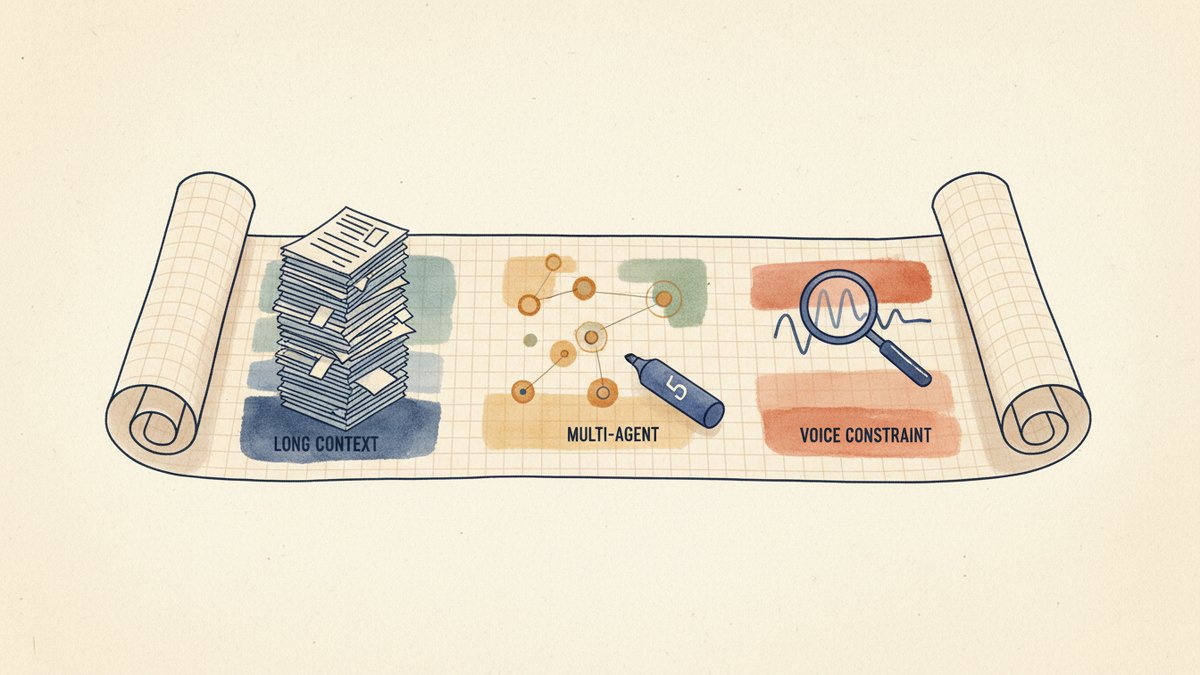
1. Long-context research synthesis past 500K tokens
Opus 4.8 started to soften around 400K tokens — the synthesis would lose the thread on a 600K-token pile. Opus 5 holds structure cleanly through my full 240-page quarterly competitor dump at roughly 740K tokens, with the brief it produces matching what I'd write on a Monday morning after reading the same material myself.
If you're still working under 200K tokens per call, you won't feel this. If you've been holding back on the kind of work I described in my NotebookLM competitor research piece, Opus 5 is the first model I'd trust with the input unchanged.
2. Multi-agent orchestration as the "manager" node
In a 12-agent pipeline, Opus 5 stays coherent as the planner node. Opus 4.8 would occasionally route a sub-task to the wrong specialist, or duplicate work the previous agent had already done. Opus 5 plans the dependency graph correctly on the first pass about 80% of the time in my runs, vs roughly 60% for Opus 4.8.
That's the difference between an agent system you trust overnight and one you babysit.
3. Tight voice constraints on long outputs
A 9-touch B2B nurture sequence has to hold a brand voice across 9 emails, ~3,500 words total. I gave Opus 5 the same brand analyzer I describe in the brand-voice lock-in post — a 12-dimension style guide built from 20 of the client's existing posts. Opus 5 held the voice tighter than Opus 4.8 across the full sequence, with fewer "this sounds like Claude wrote it" slips.
This isn't a flashy win. It's the difference between sending the sequence as-is and spending an hour editing for voice.
The three jobs where Opus 4.8 is still the right call
This is the part most "new model just dropped" posts skip.
High-volume, low-stakes generation. When I'm producing 50 ad-copy variants or 30 TikTok scripts from review-mining, I'm going to throw away most of them anyway. Opus 5 is roughly 5x the API price of Opus 4.8 for output. The quality lift on volume work doesn't justify the multiplier. Haiku 4.5 — or even Sonnet 4.6 — is the smarter pick.
Tight-latency interactive tools. Anything user-facing where the user is waiting on the response — a chatbot, a form-fill assistant, the Slack /research command I built in this workflow. Opus 5 adds about 600ms of median latency over Opus 4.8. On a research tool, that's fine. On a customer-facing widget, it's the difference between "feels instant" and "feels slow."
Anything where the model will be re-run with the same prompt hundreds of times. Price compounds. If you're running Opus 5 nightly to triage 200 emails or watch a SERP, you'll burn budget on work that doesn't need a frontier model. Use a local Llama 3.3 or Qwen 2.5 for that, the way I walk through in the self-hosted email triage post.
The honest bottom line
Opus 5 is a real upgrade — but the upgrade is concentrated in three specific jobs: long-context synthesis past 400K tokens, multi-agent orchestration, and long outputs with tight voice constraints. Outside those jobs, Opus 4.8 stays in my stack.
I'm not switching wholesale. The smart move is to route by job, not by generation. The model gets better; the routing gets more interesting.
Pick the model the job needs. That's what 15 years of marketing has taught me about every tool I've ever adopted — and AI is no different.