Meta's Muse Agent for Marketers: The Personal AI Agent That Just Shipped Into Your Ad Surfaces (An Early Routing Take)
Contents
The product I'm most ambivalent about this year dropped on September 8. I didn't get an integration request, an invite to a partner preview, or a heads-up from a Meta rep. I just opened my phone, scrolled past an Instagram Reel, and realized the "AI assistant" suggestion sitting under the comment box had quietly changed behavior. That's the whole story of Meta's Muse Agent in one paragraph: marketers didn't adopt it. They inherited it.
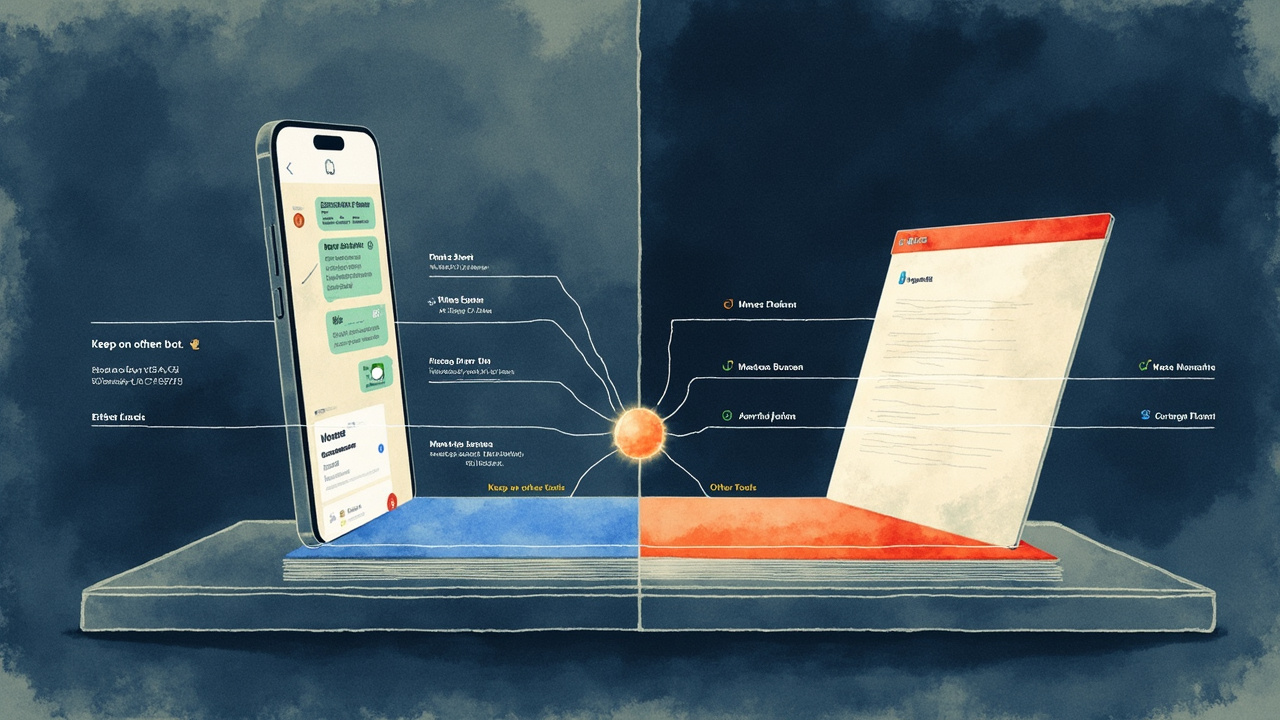
A naming clarification, because I'm already getting client messages about this. Muse Spark is the model — Meta Superintelligence Labs' frontier model that I wrote up back in July when it shipped inside the ad channels (the early read is here). Muse Agent is the product — a personal AI agent that runs on top of Muse Spark, inside a dedicated "Secure VM" virtual machine, and lives where Meta users already are: the WhatsApp inbox, Instagram DMs, the web at muse.ai, and a standalone iOS / Android app. Same brand family, totally different surface. If you've been waiting to wire Muse Spark into your ad stack, this is a different conversation. This one is about whether the agent now standing in your customer's inbox is the right one for the job — and where you'd rather not let it touch.
Let me be honest about the kind of post this is. I have not run Muse Agent through a single paid campaign. The product is brand new (six business days old at this writing), US-only at launch, and the public surfaces most marketers actually touch — Advantage+ inside Ads Manager, the WhatsApp Business API, the brand-creator flows on Instagram — aren't where Meta is positioning the agent first. So this is the early-read, routing-principle post, not a verdict from the trenches. First-hand numbers come later, when the surfaces where my spend actually lives start running Muse Agent underneath.
What actually shipped, in the words Meta has actually used
Strip the launch-deck language and here is what is verifiable from Meta's own blog post, the AI at Meta X account, and the technical deep-dive that landed the same day.
Muse Agent is a personal AI agent that takes a goal, plans the steps, executes them across connected services, and asks for explicit approval before anything consequential — sending an email, making a purchase, changing a calendar. It uses its own Chromium-based browser inside an isolated VM. A separate system called the Sentinel agent sits on the same VM and acts as the only gateway to the outside world: nothing leaves the VM without Sentinel's independent approval. Credentials for connected services live inside the sandbox; the Muse model itself never sees raw passwords or payment details. Payments go through Stripe Link — single-use virtual cards, with Link's purchase-protection terms, including guaranteed no-fee returns.
Connectors at launch cover email, calendar, payments, Google Workspace, Ticketmaster, OpenTable, Spotify, Apple Health, smart home, dining reservations, shopping, music, and events. Meta says more are coming. For services without a public API, the agent can use a browser-flow fallback. Internal codename was reportedly "Hatch"; the public product is Muse.
The model underneath is Muse Spark, with Meta saying Muse Spark is its most capable model "for real-world agentic work." Independent evaluations published before the launch show Muse Spark is competitive on language and visual understanding but lags in coding and abstract reasoning — exactly the cognitive mix you want for a tool that plans multi-step tasks across apps, less important for one that writes your next blog post.
Distribution is the part that matters most for marketers and that most coverage under-emphasizes. Muse Agent is free for most everyday needs, with two paid tiers: Muse Power at $20/month and Muse Maximum at $100/month. It's available in the US first on iOS, Android, web (muse.ai), and inside WhatsApp chats as a contact you can message. Meta has said Meta AI glasses support is "coming soon." The agent continues working after you close the app, returns when something needs your attention, and learns from prior conversations over time.
That's the verifiable surface. The thing that should catch a marketer's eye is not any of those individual facts — it is the sentence Meta has not put in big type on the launch page: the agent lives in the surfaces you already pay to reach your customers on.
The distribution is the point (again)
This is the second time in three months I've written this sentence about a Meta model launch. In July it was Muse Spark sitting inside the ad channels. Now it's Muse Agent sitting inside the channels themselves. The argument is the same and it is the entire post compressed:
You don't get to opt out of whatever powers your customer conversations.
Today the auto-reply that fires when someone messages your WhatsApp Business number at 11pm is one model. The DM thread where an Instagram shopper asks "does the jacket run small" is one model. The catalog answer that assembles on the fly when a shopper lands on a product page is one model. If Meta replaces any of them with a stronger one underneath, every one of those touchpoints gets better without you changing a setting — or, more usefully, gets different in ways you cannot inspect.
This is the difference between a tool you adopt and a tool you inherit. ChatGPT Work touches your work when you choose to wire it in. Lindy AI, OpenClaw, an Operator-class browser agent — same deal. A Meta-native agent touches your customers the moment Meta flips the switch on the surfaces you are already paying to reach them on. That's why a marketer who ignores this launch because the agent is "consumer" is making the same mistake my clients made when they ignored Advantage+ Creative in 2023: you don't have to use the surface for Meta to change what's underneath.
The technical scaffolding deserves a paragraph because it's the part marketers will be told to take on faith. Muse runs inside a dedicated Secure VM — a virtual machine allocated to each user, with its own browser. A separate Sentinel agent lives on the same VM but is architecturally isolated from Muse; it is the only path between Muse and the outside internet, and it independently approves every outbound action. Credentials and tokens are stored in the sandbox, never visible to the Muse model. Stripe Link issues single-use virtual card numbers so the agent can complete a checkout without ever seeing the user's real card. Meta has committed to a "Muse Confidential VM" before year end, where even Meta itself would not be able to see the activity.
The architecture is genuinely unusual. The thing that should not get lost in the marketing of the architecture is that the security model is also the product strategy: by insulating the agent from passwords and credentials, Meta makes it possible to ship an agent that touches payments and email without forcing every integration to be a brand-new API partnership. For a marketer that matters because it means the agent's reach is going to expand faster than the trust conversation around it — the surfaces I described in the previous paragraph will start showing up inside the agent's connector list, and the question "did Meta do this responsibly" will only be answered months later in audit trails.
Five jobs worth routing to Muse Agent
I'll keep this list honest. Muse Agent is consumer-positioned and the launch examples are not paid-media campaigns. But the same execution model — a goal, a plan, multi-step action across connected services, an approval gate before consequential steps — maps onto marketing workflows I already run. The five below are where I'd hand a goal to Muse first, this quarter:
- Routine WhatsApp Business inbox triage. "Triage my unread WhatsApp Business messages into three buckets: pricing questions (route to my human sales rep with a draft reply), order-status questions (look up the order and reply with the link), and complaints (flag with the customer history attached)." The agent asks for approval before sending the reply; I keep the human in the loop on anything that touches money or trust.
- Daily Meta Ad Library watch with a Slack ping. This is the competitor-monitoring workflow I already run — the twist is that Muse Agent can hold the connector to Meta's Ad Library inside its VM, ask for approval once a day, and post the diff to Slack without me wiring a scraper. Lower maintenance than the n8n glue, same weekly artifact.
- "Lower this recurring bill" workflows for my smaller clients. Meta has used negotiating recurring bills as a launch example. That's not a vanity demo for a marketer — it's a real job on real invoices. SaaS subscriptions you forgot to cancel, a yearly domain renewal that doubled, the cloud-storage plan you never downsized. Hand the agent the goal, the account credentials live in the VM, approval gates fire before each step.
- Vendor onboarding paperwork for new agencies and contractors. "Fill out this W-9 form, attach the insurance certificate, email it to the right address, log the result in our CRM." The browser-flow fallback is the underrated part here — the agent can hit any portal that doesn't have a clean API.
- Pre-meeting customer brief from the CRM + LinkedIn + recent news. A 30-minute prep doc assembled before a client call, pulled from connectors the user has authorized. I've been building these with NotebookLM and Claude for a while; the difference is Muse Agent runs the same job inside a sandbox where the source-of-truth data isn't leaving Meta's VM, which matters for some clients and not at all for others.
Three jobs I'd keep on the other tools
Routing is the actual skill here, not "what does Muse Agent do." The flip side matters as much as the give-it list:
- Anything where the brief is the bottleneck. If the hardest part of the workflow is "what should the agent do," Muse Agent will not help. A Claude or Opus 5 session sitting on top of a strategist's prompt is the right pick. The Muse Agent strength is execution across surfaces, not strategic thinking.
- Browser-driven work that crosses the Meta boundary. The browser that lives inside the Secure VM is going to have friction with Google Workspace, Salesforce, HubSpot, Notion — anything outside Meta's ecosystem of native connectors. OpenClaw or ChatGPT Work on a desktop with full browser reach is the right pick for those jobs. Don't make Muse fight through a sandboxed Chromium to click into Salesforce; the round trip will eat the cost advantage.
- Anything that touches brand-voice copy at scale. RSA rewrites, email subject lines at 100/week, ad copy variants in volume — same logic as the GPT-6 Astra routing I wrote up last week: volume matters more than per-token quality, and Muse Agent's per-task overhead is wrong for a job that needs to run 100 times a day for cents.
The routing principle, in one sentence
Let Muse Agent touch the Meta surfaces; keep the rest on the tools that already own that work.
If your workflow ends with "and the agent clicked through the Meta side and shipped into the WhatsApp / Instagram / Ads Manager flow," Muse Agent is the right tool this quarter. If your workflow ends with "and the agent opened a Google Sheet and updated HubSpot and sent a Slack," you're paying VM-roundtrip cost for a job that n8n or a Lindy AI agent handles on the open web. The agent is real, the surfaces are real, the routing is the job.
What I'd watch this quarter
Three watch-items, not test results:
- The Advantage+ / WhatsApp Business / Instagram surfaces quietly start running Muse Agent underneath. Same playbook as Muse Spark landing in the ad channels — the change happens at the model layer, you only see it in the output. The honest way to detect it is to A/B-test the auto-reply and DM-handling quality on a slow-moving campaign before and after the rollout.
- The Stripe Link integration deepens. Right now the agent can complete a checkout inside an approved workflow. If Link starts showing up as a payment option inside Instagram checkout or WhatsApp Business catalogs (not just inside the Muse app), the commerce implications get real for any DTC marketer running on Meta surfaces.
- The Muse Spark gap on coding and abstract reasoning. Independent evals show Muse Spark lags on harder reasoning. For the marketer-level jobs on the list above, this won't matter. For the agent's eventual ability to negotiate, plan around ambiguity, or handle an exception in a multi-step workflow, the model's ceiling matters. Worth watching whether Muse Spark 1.2 closes that gap, because the agent's reliability ceiling is the model's ceiling.
The thing I'm personally watching, beyond all three, is the question I opened the post with: how many of my clients will quietly find that an agent is now standing in their WhatsApp inbox that they didn't choose and can't turn off. That's the part of this launch that is genuinely new. The architecture is unusual and Meta's Secure VM pitch is unusually detailed for a launch day. The risk and the opportunity are the same fact: an agent that inherits your surfaces is also one you cannot configure, audit, or — most importantly — opt out of when its behavior drifts.
The question was never whether Muse Agent is more capable than ChatGPT Work or Lindy AI. It's whether the next message your customer gets in your WhatsApp inbox comes from an agent you can review the work of, or one you have to trust because you didn't build it. That's the watch-item worth staying close to. Until then: a launch worth routing around carefully, not yet a tool worth trusting blindly.