DeepSeek Harness for Marketers: What 50K GitHub Stars Means for Your Stack (And Why I'm Not Installing It Yet)
Contents
50,000 GitHub stars in roughly 24 hours. That's not a typo. That's how fast DeepSeek Harness hit the front page after its August 13 release.
If you missed the news, the short version: DeepSeek, the company behind the V3/V4 model family, just open-sourced its first Agent product. MIT license. Plugin architecture. A Web UI you can launch from a single npx command. The whole thing is positioned as the "Android of the Agent industry" — a runtime layer any model, any tool, any workflow can plug into.
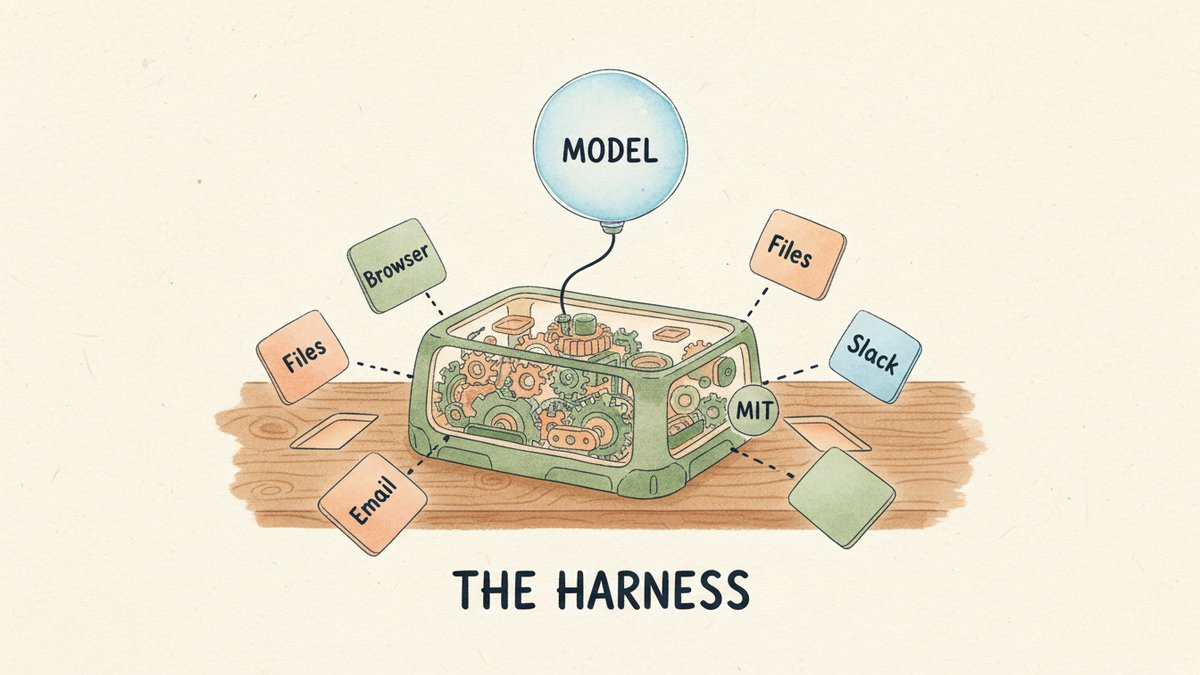
DeepSeek's tagline is the cleanest part: Model + Harness = Agent. The model is the brain. The Harness is the body. Yesterday's V4-Pro-0813 launch shipped the brain. Tonight's open-source release shipped the body.
This is the most ambitious agent framework from a Chinese AI lab yet. As a marketer, here is what it actually means for your stack — and where I'd skip it.
What it actually is (and what it isn't)
This isn't a new model. It's not a Claude Code clone. It's not a SaaS product.
It's a runtime — software that connects models to the world (file systems, terminals, browsers, code tools, other agents) and orchestrates the steps between them. DeepSeek's official framing puts the model on thinking duty and the Harness on scheduling, validation, and execution.
The architecture is built on Cordis, a plugin meta-framework. Everything is a plugin: models, tools, skills, sessions, sandboxes, storage, loops, schedules, even the UI. You swap plugins in and out without touching the source. That detail matters more than it sounds like — it's the reason a Chinese-language lab can ship something competitive with Anthropic's first-party agent in the same year.
Four runtime modes are baked in:
- Standard — full toolset, the default mode
- PTC (Programmatic Tool Calling) — the model writes code to chain multiple tool calls in one shot (great for multi-step workflows without round-tripping through the LLM each step)
- Minimalist — shell + file editor only, used for benchmarking models in a stripped-down environment
- Creative — flexible orchestration for open-ended tasks
As a marketer, you don't need to know how Cordis works. You need to know that the plugin model means new tools, new models, and new integrations can land without waiting for DeepSeek to ship them.
Three reasons marketers should pay attention
(1) The cost stack just consolidated. Yesterday's V4 pricing reset made DeepSeek's input tokens among the cheapest in the frontier tier. Today's Harness launch ships the runtime that uses those models. If you're already running DeepSeek via OpenRouter for high-volume, low-stakes jobs — daily Reddit digests, SEO briefs, subject line A/B variants — the natural next step is to host the agent layer on your own machine. No per-seat SaaS fee. No per-task token multiplier from a wrapper vendor.
(2) Private deployment for regulated data. Marketing teams handling healthcare, finance, or any data covered by a regulator now have a third option beyond "ship to OpenAI" and "self-host a base model." The Harness abstracts the model layer; you can plug in your existing self-hosted DeepSeek-V4 and run the agent entirely on your own hardware. No data leaves your box. For a regulated brand, this is the part that matters.
(3) The plugin ecosystem is the long-term bet. Because Cordis is plugin-based, anyone can write a plugin. DeepSeek's own npm registry ships with first-party plugins, and a community roster is already growing. The day a "Browserbase plugin" or an "Ahrefs plugin" or a "Klaviyo SDK plugin" lands, your local Harness gains a new capability without you writing code. This is the open-vs-closed story playing out again: ChatGPT Work and Lindy AI are walled gardens; DeepSeek Harness is the open lot next door.
Two reasons to wait
(1) The install path is still developer-leaning. The fastest way in is npx @deepseek-ai/dsh web after Node.js is installed. If "install Node.js" already feels like work, this isn't your product yet. There are no marketer-facing templates, no click-to-start recipes, no hosted version. Compared to Lindy AI's guided template gallery or ChatGPT Work's Sites-and-connectors onboarding, the gap is real.
(2) It's a preview. v0.1 means APIs will change, plugin contracts will break, and the docs are still being written. If you wire a production marketing pipeline to this today, you'll be rewriting it in 90 days. Wait for v0.3 or v1.0 unless your team has a developer who wants to keep pace with the API churn.
Where it sits in the agent stack
Three agent frameworks already have posts on this blog. DeepSeek Harness slots in alongside them, not above them.
- OpenClaw — open-source local agent, works with any model, similar MIT-license ethos. Different personality: OpenClaw is more opinionated, more integrated out of the box, less plugin-heavy. For marketers who already have a developer on the team, this is the one to ship to production this week.
- Lindy AI — no-code, hosted, 100+ native integrations. Opposite tradeoff: pay monthly, no install, but no private deployment.
- ChatGPT Work — hosted, OpenAI-only, the easiest button. Unbeatable for marketers who never want to look at a terminal.
DeepSeek Harness sits at the developer-friendly end of the same spectrum as OpenClaw, with one key difference: the official DeepSeek stamp and the promise of a model-agnostic plugin ecosystem. That's the long-term play. The short-term play is OpenClaw for marketers who want it working this week.
The takeaway
Two years ago, "AI in marketing" meant asking ChatGPT a question. A year ago, it meant a Make.com flow. Today, frameworks like DeepSeek Harness are pushing the boundary one level further — toward a world where the agent runtime is something you can run, own, and assemble like Lego.
You don't have to install it today. You should pay attention to it. Because the next 12 months of agent development will be shaped by whichever runtime wins the ecosystem war — and right now, the open-source camp has more momentum than the closed-source camp does.
My bet: OpenClaw for production this quarter, DeepSeek Harness for production next quarter. The DeepSeek V4 pricing reset on August 6 and the Harness v0.1 release on August 13 are the same story told in two chapters — the cost side and the architecture side both shifted in the same week. Whenever you're reading this, the second chapter is the longer one.
I'll write the follow-up when the plugin ecosystem has at least one Ahrefs or Klaviyo plugin worth using. Until then, this is a "watch the ecosystem" post, not a "ship it today" post.