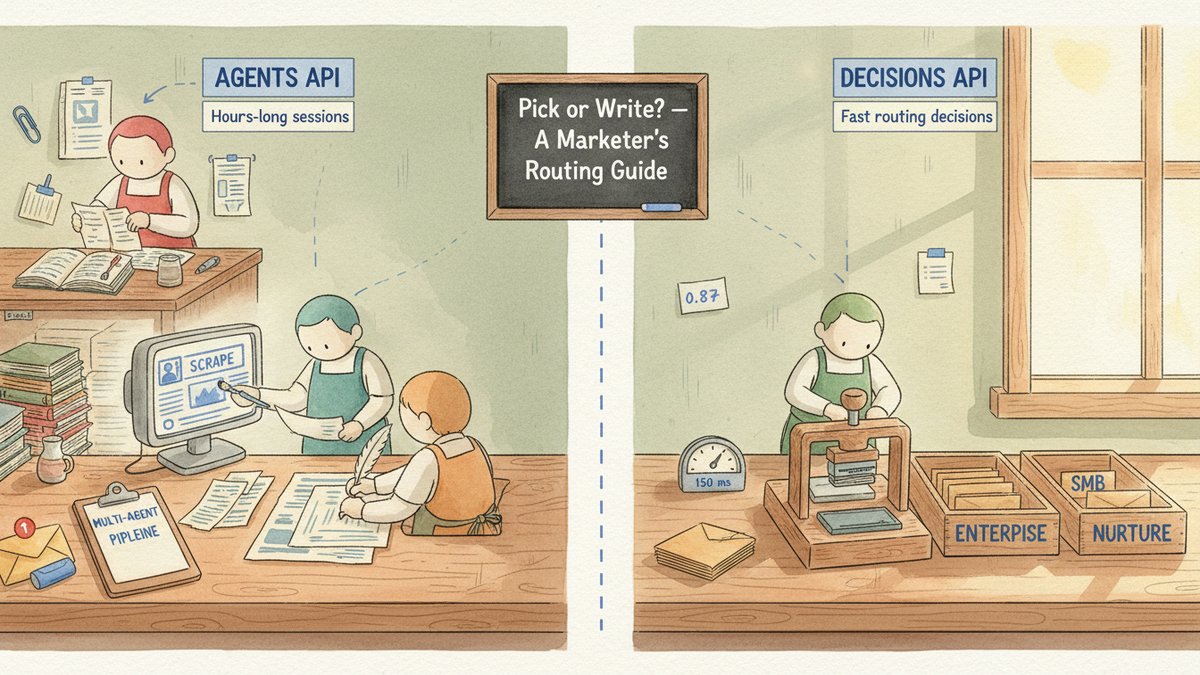
Two OpenAI APIs shipped three weeks apart solve very different problems. A marketer's read on what each one actually does, where each one earns a slot in a real automation stack, and the routing principle that picks between them.
Dots launched at DevDay on Sept 29 2026 as OpenAI's answer to Meta Muse — a persistent, GPT-6 Astra-powered agent with its own cloud computer. Here's the first-week practitioner read: the 5 marketing jobs I'd hand it, the 3 I wouldn't, and where it sits against the Claude/Gemini/Muse agents already in my stack.
OpenAI shipped GPT-6 Sol and GPT-6 Luna on September 22, 2026 — three weeks after GPT-6 Astra, at half the per-token price of GPT-5.6 Sol and Luna. Sol ($2/$10) is the workhorse, Luna ($0.10/$0.50) is the budget engine, and Terra is gone. Five jobs to give Sol, three to keep on Astra or peers, and the routing principle that falls out once you stop chasing the flagship.
OpenAI shipped GPT Image 2.5 on September 8 with two API variants — Flare (speed, default) and Sunburst (precision) — at the same price as 2.0 ($5 text / $8 image in, $30 image out per 1M tokens), with up to 50% lower latency. The marketing-relevant upgrade isn't raw image quality; it's that the model finally respects what you asked it to leave alone. Five jobs worth rerouting, three to keep on Nano Banana 2, Midjourney V8, or Seedream 5.0 Pro, and the one sentence that captures the split.
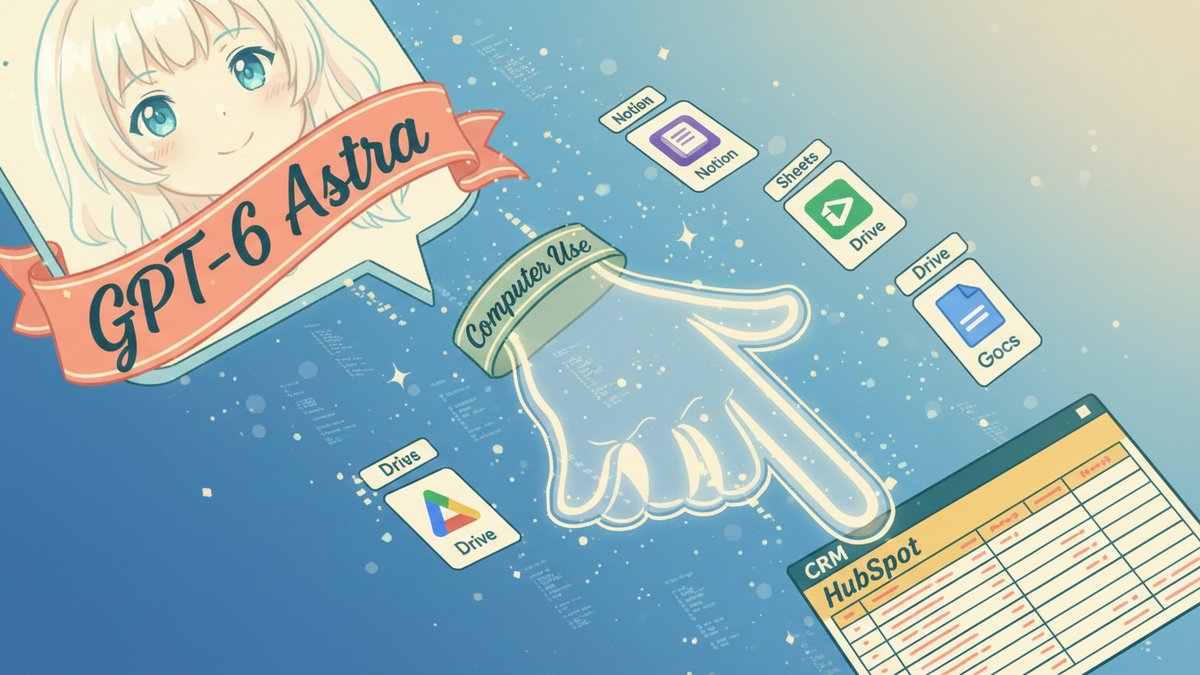
GPT-6 "Astra" landed September 3 at $10/$50 per 1M tokens with 1.05M context and 0% out-of-scope safety hits. The headline is Computer Use — a model that clicks through HubSpot, builds spreadsheets, and pulls competitor PDFs into structured tables. Five jobs worth routing to it, three to keep on Sol or Opus 5, and the routing principle that fits both.
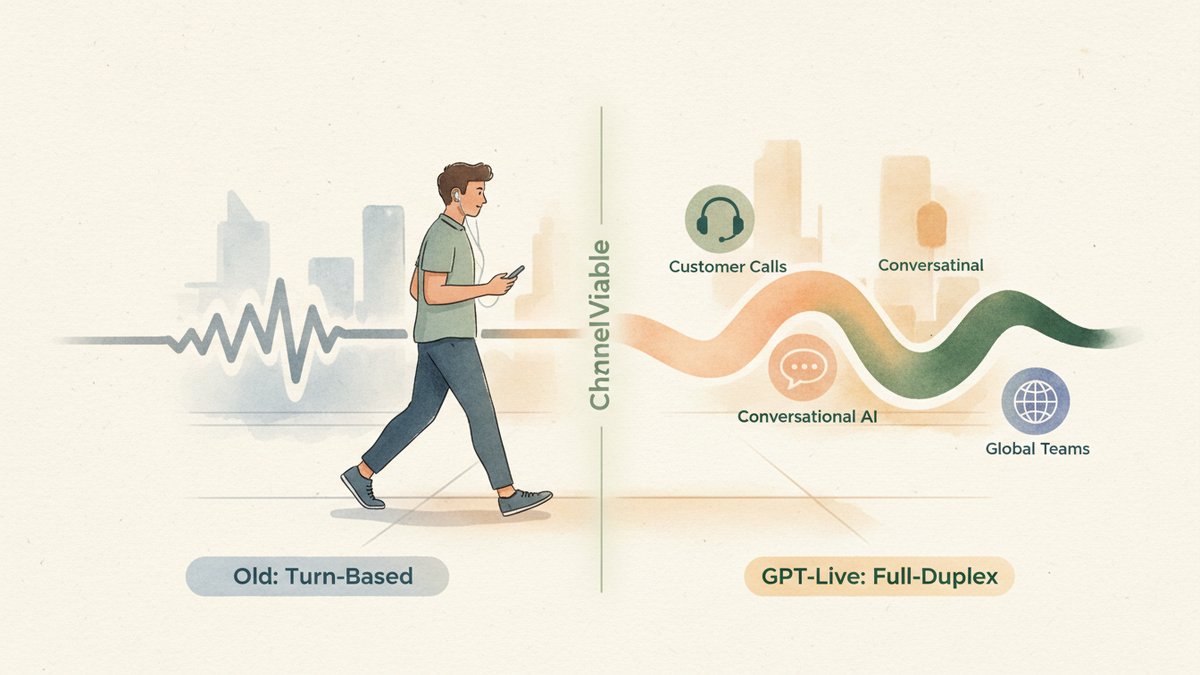
OpenAI replaced ChatGPT's voice mode with GPT-Live, a full-duplex model that listens and speaks simultaneously. It crosses a threshold where voice becomes a viable channel — but not for everything. A marketer's framework for what's ready and what isn't.
ChatGPT Work is an agent, not a smarter chatbot — you give it a goal and it works for hours, then hands back a finished deliverable. Here's the honest split for a marketing team, two days in.
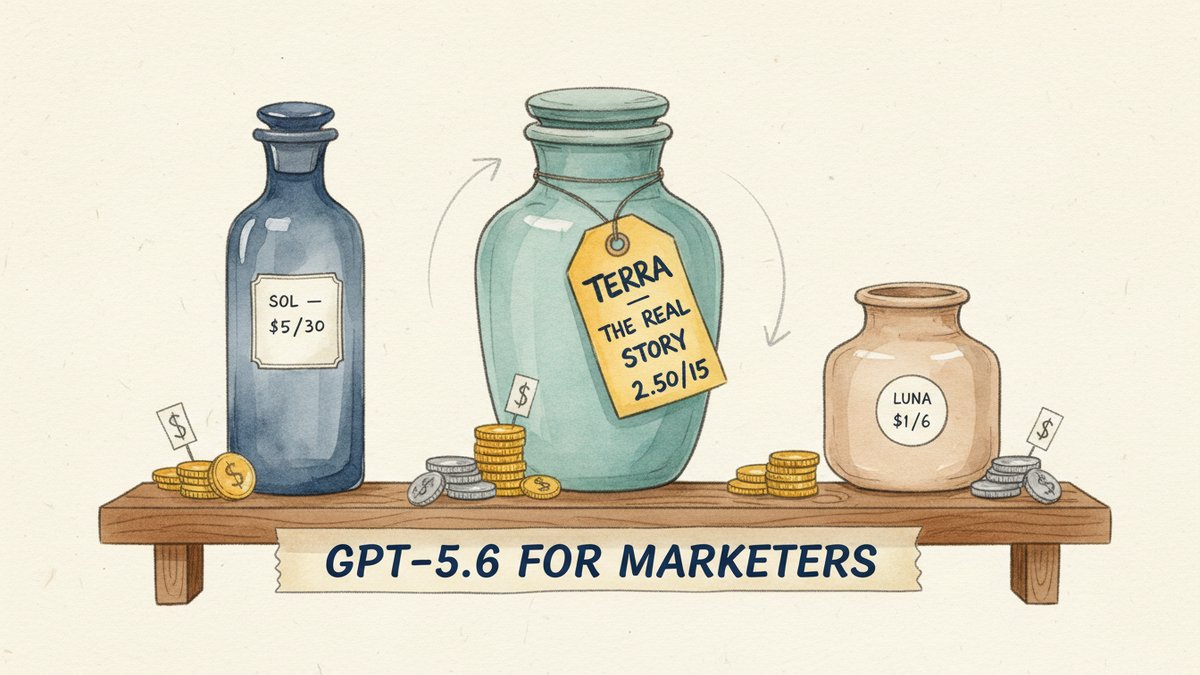
OpenAI shipped GPT-5.6 in three flavors (Sol, Terra, Luna) on June 26, 2026 — but only to a small invitee list, pending US government review. Here's the practitioner's read: what the 1.5M context window actually unlocks for marketers, the pricing reality (Terra is the real story, not Sol), and the four workflows I'll route to it the day it opens up.