Gemini 4 Carbon hit 59 on the Artificial Analysis Intelligence Index v5.0 — one point above Claude Opus 5.5, confirmed independently — and Google handed it to a list of cyber defenders and nobody else. A routing table for what to run today, the marketing-adjacent surface worth queuing up for later, and why the approval problem is really a marketing problem.
Moonshot's K3.1 Pro has the same 2.8 trillion parameters as the Kimi K3 I wrote about in July. Nothing about the model changed; everything about how it performs did. Here's what that means for the work you hand to AI — including the part nobody mentions: a 33% price cut doesn't lower your bill.
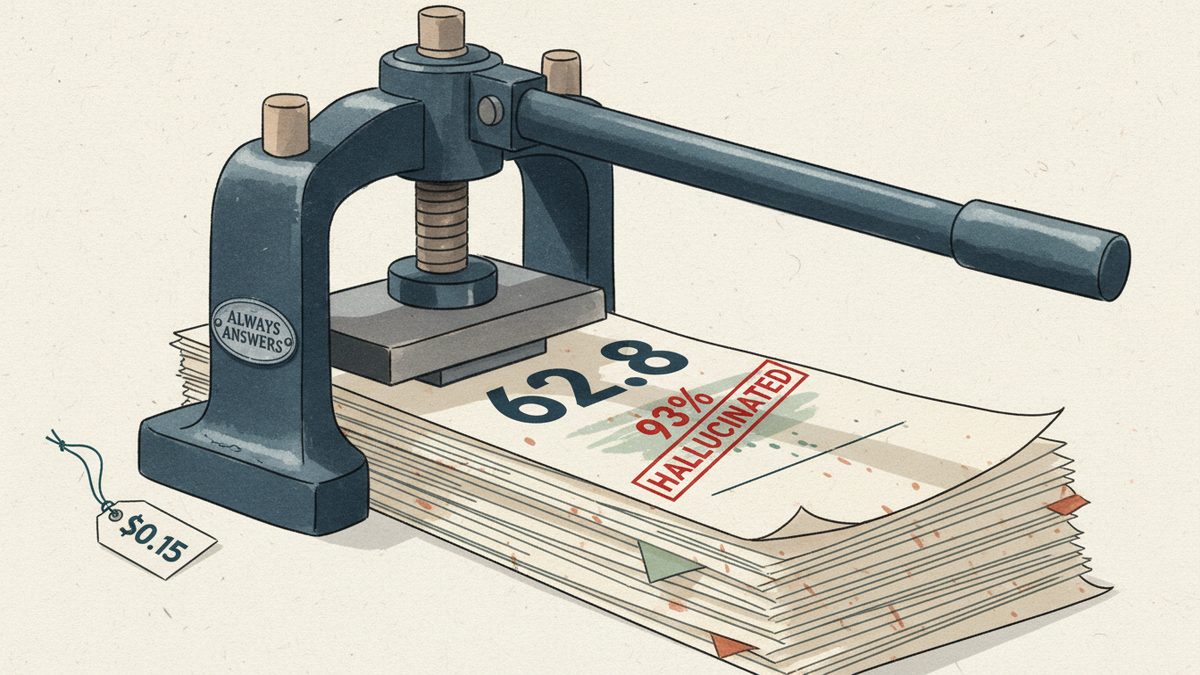
MiniMax shipped M3.1 Flash on October 19 at $0.15 per million input tokens, and it leads the low-cost tier on AutomationBench-AA — the benchmark for multi-step business workflows across SaaS tools. Six days later, Artificial Analysis measured a 93% hallucination rate on the same model. Both numbers are true. Together they define exactly which marketing jobs to hand it and which to keep away from it.
Jev is a System One Model that returns typed decisions with calibrated probabilities — no text, no parsing, $0.042/MTok input, output free, 70–500ms latency. Here's the routing layer every marketing pipeline was missing, plus the caveats the launch post didn't lead with.
DeepSeek shipped V4.1 Flash on Sep 10 with an unusual Causal Encoder-Decoder architecture and a $0.003/M off-peak cache-hit rate — about a tenth of what V4 Flash charged. The model has also absorbed V4 Pro's traffic from Sep 14. A working marketer's first-week take on what to hand it, what to keep on Opus 5 or the frontier tier, and where V4.1 Flash sits in the cache-heavy background stack.